
Big DONG Energy
On former Vikings, geopolitical chess games, spicy Asian noodles, and endangering endangered animals.

“Something is rotten in the state of Denmark.” – Marcellus, The Tragedy of Hamlet, Prince of Denmark
The nation-state of Denmark regularly places towards the top of international surveys ranking the world’s happiest countries. Happiness is of course a highly subjective concept, but with the definition chosen by the World Happiness Report, it’s clear that on the whole, Danes feel pretty good about life in their country. The subjective contentment Danes report to feel can likely be linked to a variety of things that the country objectively has going for it. Humans are social animals, and no matter how independent and individualistic a culture likes to consider itself, some semblance of relative social equality and a sense of community spirit adds to the quality of life for all but the most anti-social or psychopathic among us.
And regarding happiness, it takes no stretch of the imagination to see that not having to worry about how to pay for emergency healthcare and university education, for instance, would make any person less tense, nervous, or worried about their situation in life. And then given that, one could just focus on one’s family and job, making it all the more easy to thrive. Multiply this across an entire population and you have a recipe for a content, motivated, productive society. There are of course trade offs, as these “benefits” don’t pay for themselves. But relinquishing control of that part of their lives to the State is the mental calculus that Danes, at least reportedly, are happy to make. In fact, the Danes are happy about all sorts of stuff. I know because the Danish government says so.
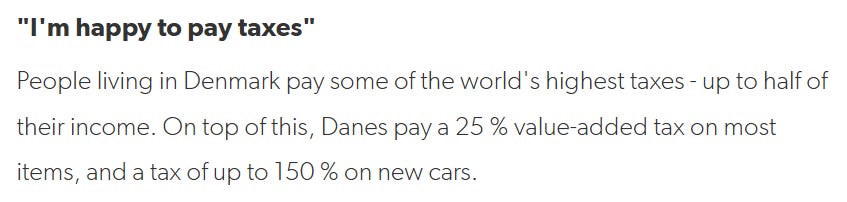
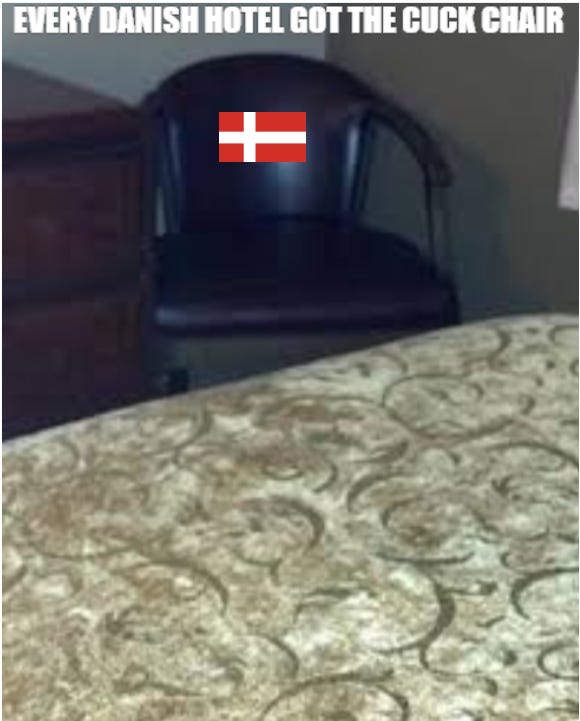
The American mind cannot comprehend this. But, hey, to each his own I guess. Legos, container shipping companies, and renewable energy producers may go through their ups and downs, but at least the cuck chair industry will always have a steady source of demand.1
But don’t let the well-established, socialist welfare state apparatus fool you. The Danes don’t live in some sort of nanny state where the government tries to micromanage the lives of the population. The Danes are a proud people – of Viking stock no less. Descended from seafaring traders and warriors who raided2, settled, and influenced many areas of European culture. They are still as hearty and independently-minded a people as they ever were. Just not with spicy Asian noodles…
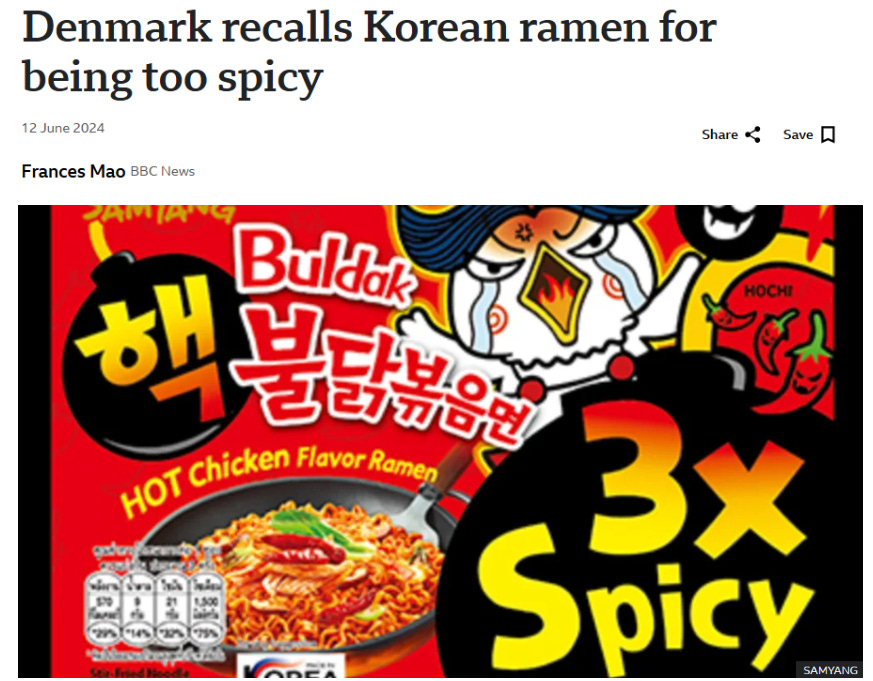
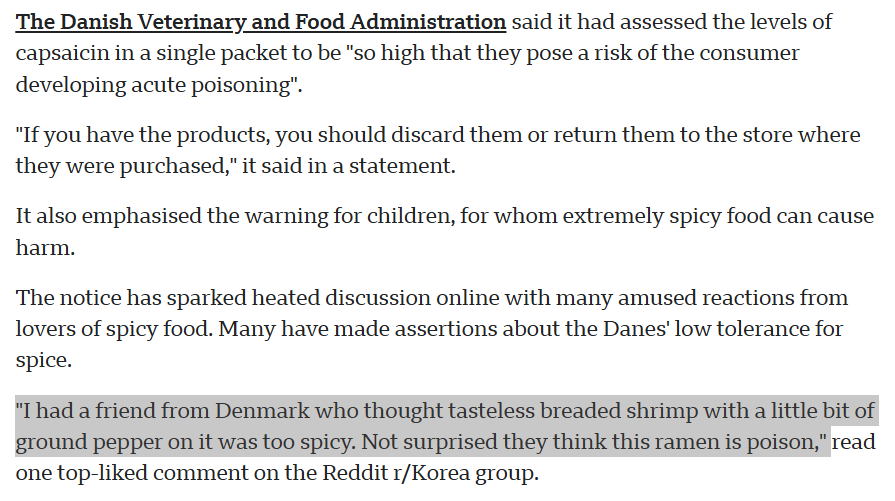
Perhaps too much happiness is a bad thing. It makes you soft.
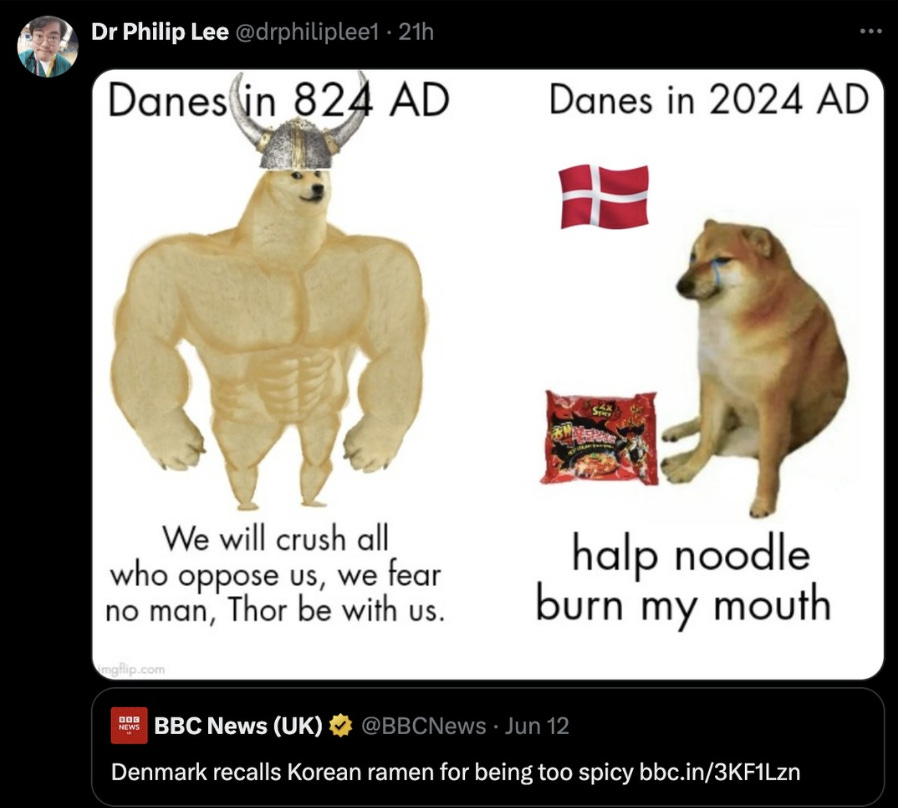
Is it any wonder that Donald Trump thinks he can just annex Greenland?
I kid, of course. But the state of Denmark is at a bit of a crossroad in 2025 – both geographically and ideologically. I wondered back in July when Donald Trump traveled to Scotland and when he did his EU tariff announcement press conference with a very sheepish-looking Ursula von der Leyen, why he spent so much time railing against wind turbines. It was red meat to the Leftist-minded legacy media and anti-Trump organizations.
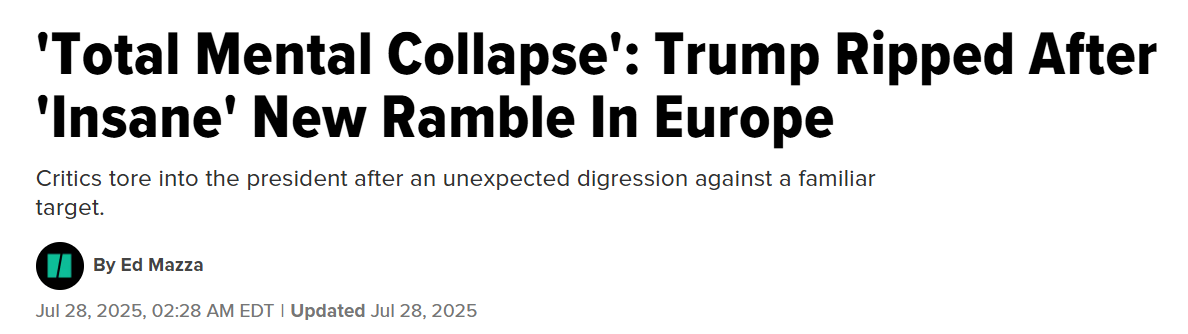
“And the other thing I say to Europe: We will not allow a windmill to be built in the United States,” Trump said. “They’re killing us.”
“They’re killing the beauty of our scenery, our valleys, our beautiful plains ― and I’m not talking about airplanes. I’m talking about beautiful plains, beautiful areas in the United States, and you look up and you see windmills all over the place. It’s a horrible thing. It’s the most expensive form of energy. It’s no good. They’re made in China, almost all of them.”
If you have ever read any of the numerous critics of wind energy who actually know about power generation and electrical grids, you’d know that what Trump is saying is, while perhaps hyperbolic, not wrong. Aesthetically, wind turbines aren’t as ugly as solar panels, but that’s my own subjective view. As far as getting value for money, however, intermittent wind energy, when added to a major metropolitan electrical grid, can be…problematic, often adding to instability in the grid.
And as happy as it might make one feel seeing a giant three-pronged power generator spinning like a pinwheel and thinking that supporting the company or political party that spearheaded putting it up is doing your part to save the planet, if the electricity generated by that turbine is not managed correctly or it’s just windy at the wrong time, you might feel differently when you get your next electricity bill.
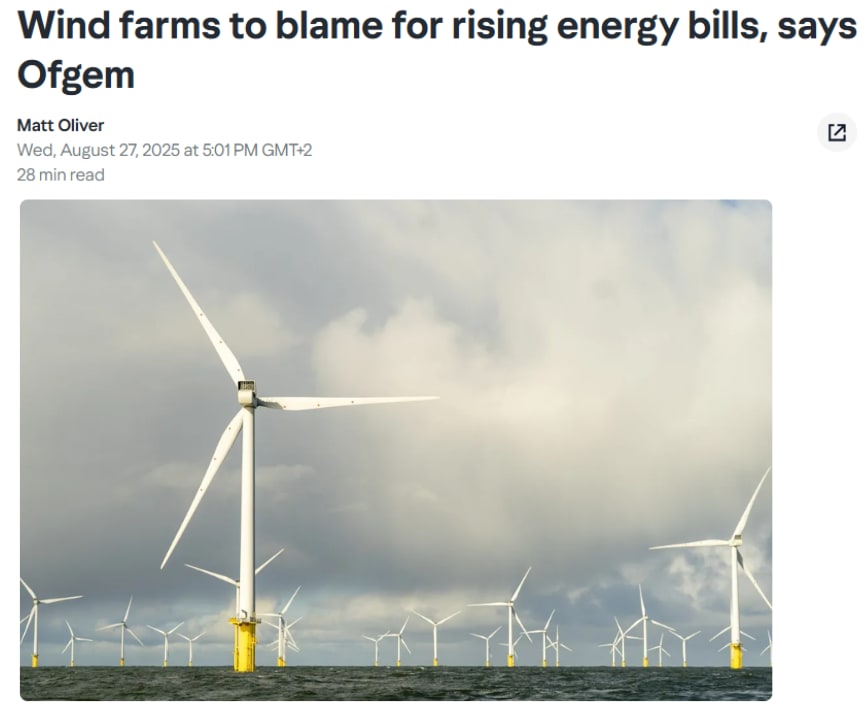
But I’m not here to pontificate on the pros and cons of renewable energy. I’m here to analyze how a small Scandinavian country of 6 million people like Denmark has found itself in the middle of a geopolitical firestorm and what it may have to do to forge a path forward – a path that could change its relationship with Europe forever.
Blue chip businesses, Beirut-like returns
Denmark is home to many well-known companies. From childhood mainstay LEGO A/S and pharmaceutical multinational Novo Nordisk, to logistics and transportation heavyweights DSV and Maersk, as an economy and a stock market, Denmark punches well above its weight.3
But something is so rotten in the state of Denmark that in 2025, the benchmark Copenhagen 20 Index is one of the only stock indices on the planet that has seen negative returns. As of this writing, it’s down 26% year-to-date, and though it’s cherry picking dates a bit, over the past two years, the similarly-sized country of Lebanon, a perennial basket case of an economy, has seen its benchmark stock index outperform that of Denmark – by a wide margin, even when adjusting for currency.
One of the major reasons for this pitiful Danish stock market performance is a company that has drawn the ire of Donald Trump and wind energy opponents everywhere – Ørsted A/S.
“It’s a good change. It’s a good change...”
Dansk Olie og Naturgas A/S, meaning “Danish Oil and Natural Gas” used to be largest energy company in Denmark. The company was usually referred to by its acronym DONG until it was rebranded in 2017 as Ørsted A/S.
The company trades on the Copengagen stock exchange with the ticker ORSTED, but the ticker for its US-traded unsponsored American Depository Receipt, DNNGY, still hearkens back to its old name. The fortunes of the company’s stock seem to have risen and fallen with the market’s demand for “green energy” investments.
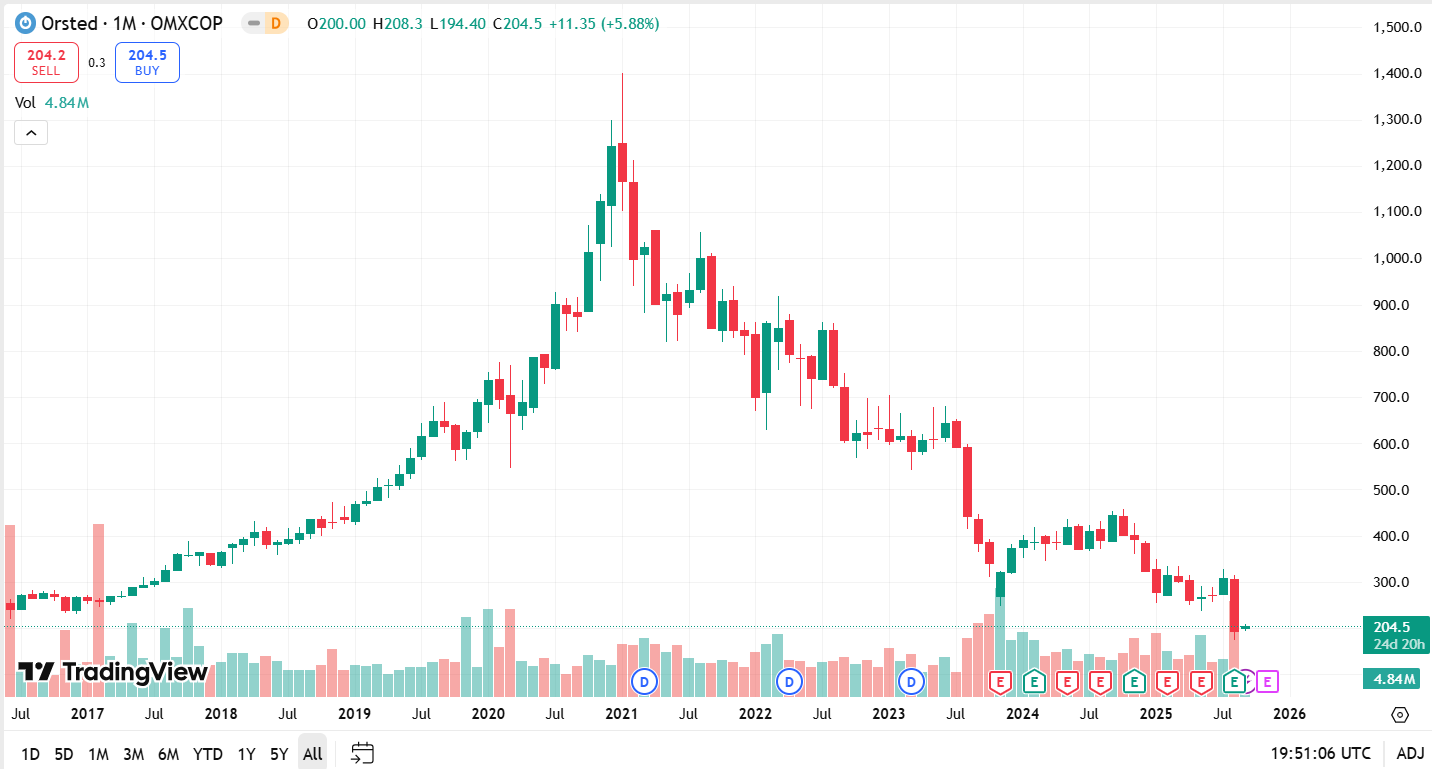
Ørsted is as close to a “national champion” as any publicly traded Danish company can be. Its largest shareholder, currently with 50.1% ownership, is the government – the Kingdom of Denmark. For all intents and purposes Ørsted is a state-owned enterprise.
Having completely divested from its oil and gas business years ago, by its own admission, Ørsted is now a “renewable energy company that takes action to create a world that runs entirely on green energy.”

And part of their efforts to create this world are offshore wind turbine projects off the coast of New England in the United States. The Revolution Project, for example, is already 80% complete, and if estimates are to be believed, will provide 704 MW capacity to power around 350,000 homes across the states of Rhode Island and Connecticut. And Donald Trump just shut it all down.
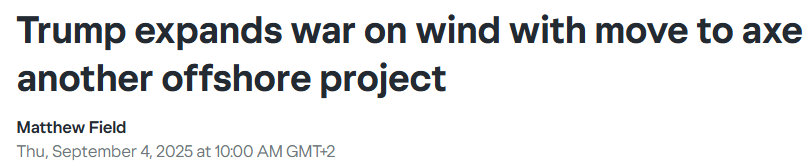
From The Telegraph (emphasis added):
“In August, Mr Trump ordered Ørsted to stop work on a $1.5bn (£1.1bn) wind farm project 12 miles south of Martha’s Vineyard that was already 80pc complete...The US president’s attack on Denmark’s Ørsted comes after his offer to buy Greenland was he was rebuffed by the Danish government. Mr Trump has repeatedly insisted he intends to annex the world’s largest island and threatened to use economic pressure to secure the region…
Last month, Mr Trump also cancelled $679m in grants for offshore wind projects on top of billions of pounds he has cut from US budgets for solar subsidies and green vehicles.
He has labelled government funding for renewable energy a ‘new green scam’ and issued a call to ‘drill, baby, drill’ for fossil fuels across the US. A group of 85 scientists this week attacked the US department of energy for publishing a report that downplayed the risks of climate change, accusing it of having ‘cherry-picked data’.”
This all begs the question. If climate change needs to be taken seriously, are wind turbines actually a part of the answer?
The government of Denmark, and surely much of the country’s blissfully happy population would have the world believe that they all really care about preserving nature and the natural environment.
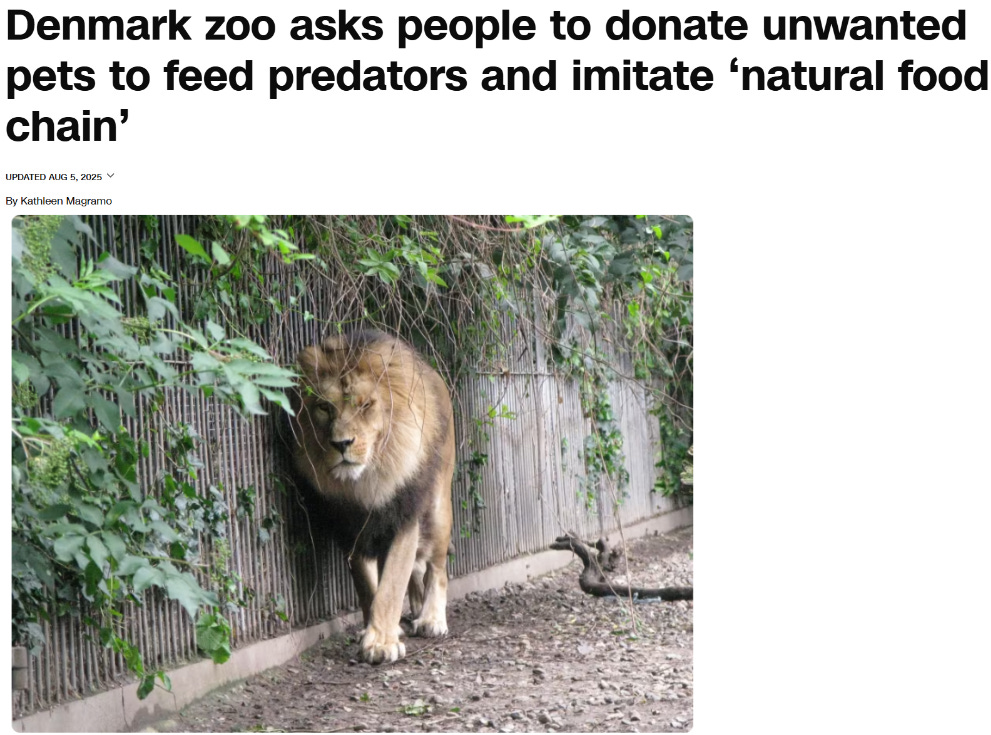
That goes for the diet of Danish zoo animals but maybe not so much for the actual people.
But Ørsted is sincere, right? They gave up on the supposedly lucrative oil and gas business to focus on wind mills, not because they weren’t really all that good at what they did, but because they care so much about the environment.
But some people who really care about the environment might take issue with that statement.
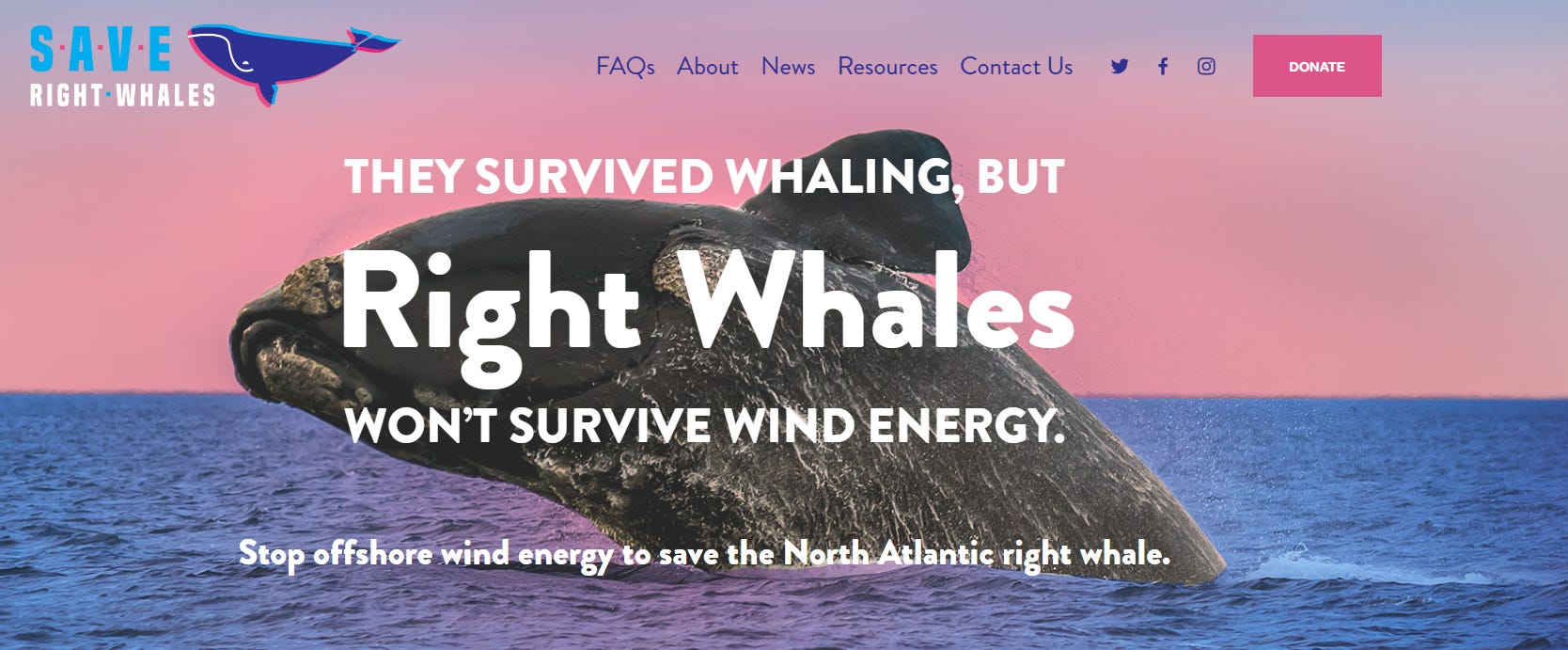
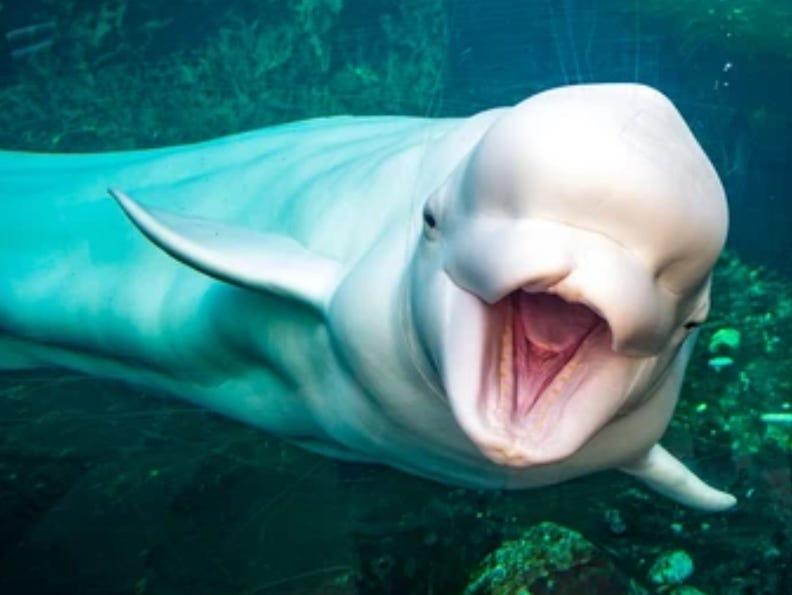
There is evidence that increased boat traffic of loud, high-decibel sonar emitted by wind industry vessels is correlated with specific whale deaths near Ørsted sites.4
Correlation does not equal causation as we know, and I’m sure there is plenty of industry-sponsored evidence to refute these types of claims. But watch the video and if you don’t think it’s some sort of oil & gas industry propaganda, I doubt you’ll be able to look at a wind turbine the same way again.5
But one thing is still clear. Denmark cares about nature – and that means the natural world and the natural order of things.
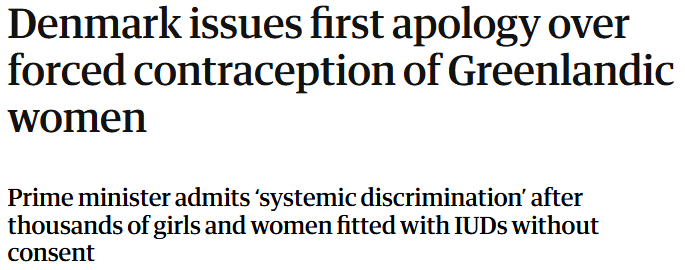
Is it a coincidence that Denmark’s Prime Minister Mette Frederiksen apologized for this forced sterilization scandal from over fifty years ago at a time when the United States is clearly running espionage and influence operations in Greenland?
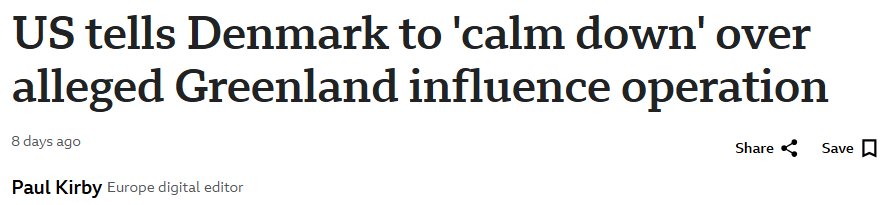
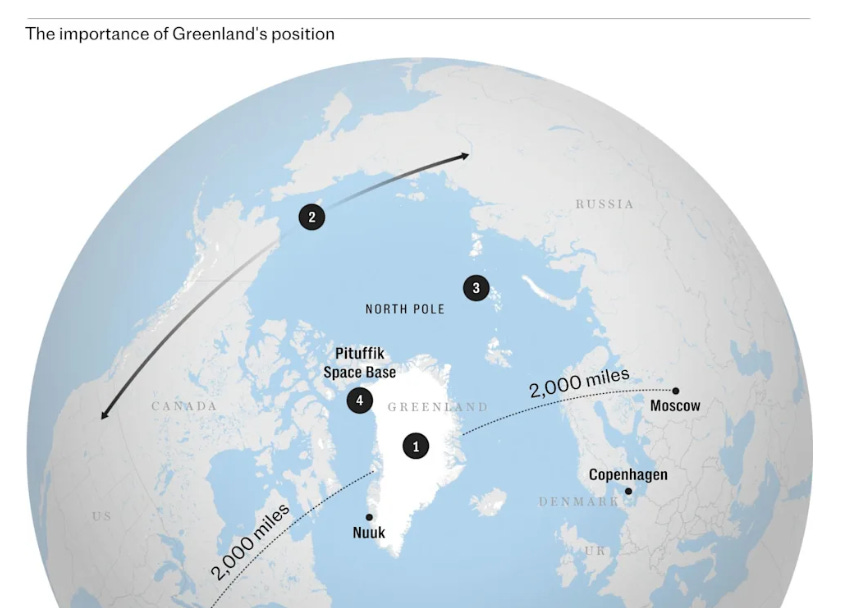
The writing is on the wall. I believe the Trump administration is going to attempt to annex Greenland, thereby removing one of the last footholds of Continental Europe from the Western hemisphere. Rightly or wrongly, morally unjust or not, I believe that President Trump sees full control of Greenland as a matter of US national sovereignty. The geography makes it thus.
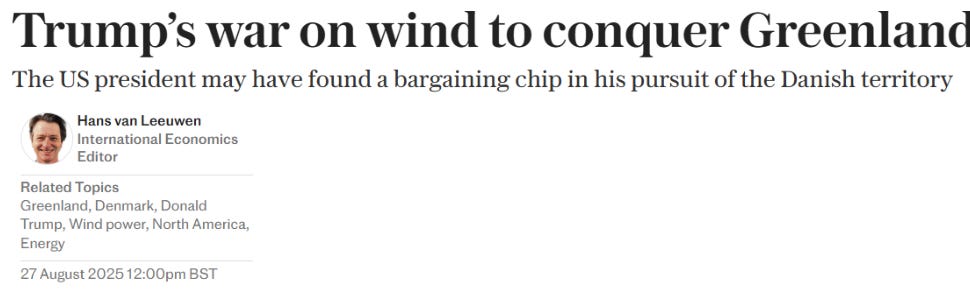
The state of Denmark is at a crossroad. The Danes were smart enough to keep relative autonomy within the European Union with regards to monetary and immigration matters. The Danish krone is pegged to the euro, but nothing says it has to stay that way forever. And the “Danish model” just might be a middle-of-the-road policy that helps ameliorate the migrant problems that have plagued Europe for years.
“[W]hen it comes to migration, Denmark has taken a dramatically different turn. The country is now ‘a pioneer in restrictive migration policies’ in Europe, according to Marie Sandberg, Director of the Centre for Advanced Migration Studies (AMIS) at the University of Copenhagen - both when it comes to asylum-seekers and economic migrants looking to work in Denmark…
Slogans like "Danskerne Først" (Danes First) resonated with the electorate...
Denmark came under glaring international attention for its hardline refugee stance, after it allowed the authorities to confiscate asylum seekers' jewellery and other valuables, saying this was to pay towards their stay in Denmark.”
I can’t claim to really know what motivates Donald Trump or his inner circle. But controlling the Arctic pathways to the United States from Russia (and by proxy, China) has to be toward the top of that list.
And they probably also think, that if European leaders really believe that the climate, of all things, is such an imminent threat to human life (their own comfortable, well-fed human lives no doubt chief among their concerns) that they would be so intent on deindustrializing their economies by divesting from the profitable business of high-density, reliable energy sources like oil and gas in favor of glorified windmills and other 15th century technologies, then Trump is right to think that there is nothing too insane for these bureaucrats to consider – perhaps like someday exporting millions of migrants to a newly green, climate-changed Greenland.
And at the center of it all today, is Ørsted. Running low on energy, and no DONG to its name, it has now been forced to raise capital. And shares continue to fall. Many a European stock analyst — who purports to be baffled by what President Trump says and does — will tell you that Ørsted is undervalued. Don’t believe it.
The Danish Kingdom will be forced to support it. They will do what governments, Kingdoms or otherwise, always do in this day and age. They will print money and prop the company up. And Denmark will eventually have to make a choice between letting nature take its course by relinquishing control one of the last vestiges of its former seafaring glory days, and propping up its feel-good ESG darling of a state-owned enterprise, eventually with taxpayer money (happily turned over by the citizens to the State of course).
If it chooses the latter, it may not be long before the Danes are forced to devalue their currency versus the euro. I don’t think that is on the table anytime soon, the peg has lasted for decades. But stranger things have happened, and that is where the race to the bottom always seems to finish with currency debasement. Now, that would get Ørsted and other stocks in the Cophenhagen 20 Index pumping – and would make for a lot of happy Danish pensioners. And all it would cost is the end of a former colony and a whale species or two.
❤️“Like” this piece and this is how happy you’ll make us.
i.e. robbed, raped, and murdered
LEGO is a private company and not publicly-traded on any stock exchange.
Unless you like killing whales, which if that’s the case, I at least applaud your honesty and you should lend your support to offshore wind turbine projects across the globe. #Fuckthemwhales
For anyone wondering, I have tried the spicy noodles mentioned in the post. It's brutal. But that's just 'cause I'm a puss when it comes to spice and not that they should be illegal :D
Fortunately Denmark allowed most of the banned noodles back into the country.