
Shared Custody
Lessons and warnings on ownership from Norway, Italy, and Cowichan Nation.

“Possession is nine tenths of the law.” – some asshole who probably just stole something
What do you own? A house? A car? Some stocks in a portfolio? Gold in a bank vault?
It’s a simple enough question. And it’s a question that, for the past eight decades or so, people in the Western world have not had to worry much about. But that was not always the case, of course. Personal property was routinely taken by force over the vast majority of human history – the spoils of war, if you will.
The M/S Bomma
June 28, 1940 is a date that is mostly forgotten. But it will live on in certain corners of the internet for a long time to come. Most Norwegians probably have no idea of its significance, despite the fact that it was quite an important date in the country’s history. Not long after the Nazi invasion of Oslo began in April of that year, and just eighteen days after conventional armed resistance to the German invasion ended, on June 28th, a Norwegian freighter, the M/S Bomma, safely reached Baltimore, in the United States. It reportedly carried a secret cargo of gold bullion worth $9,000,000 that ordinary Norwegians had helped smuggle out of the country. And remember, that’s 1940 dollars.1
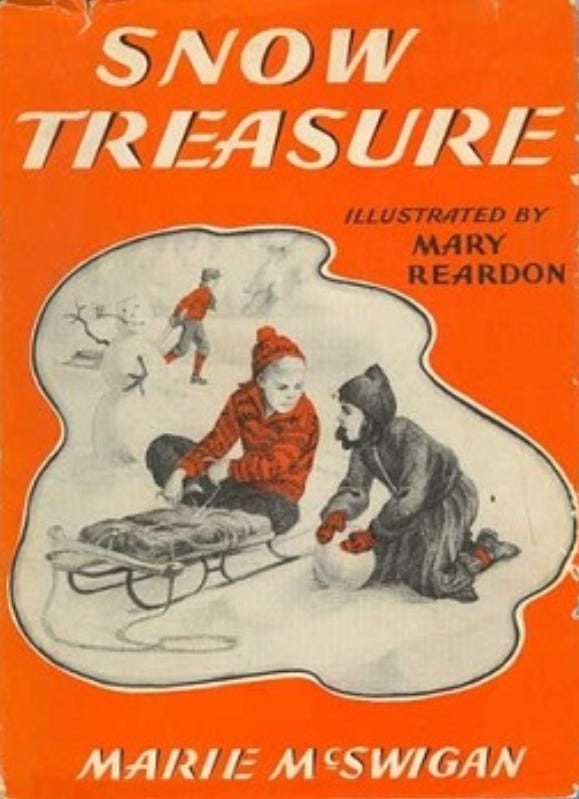
The story of the M/S Bomma is fictionalized in the 1942 children’s story Snow Treasure by Marie McSwigan. Generations of American children read it in elementary school.
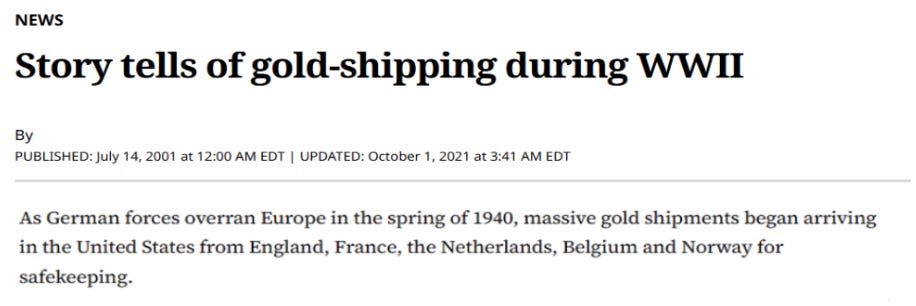
The story of the Bomma’s and other ships’ exploits to keep Norway’s wealth from being plundered is also recounted in a Baltimore Sun newspaper article published in 2001.
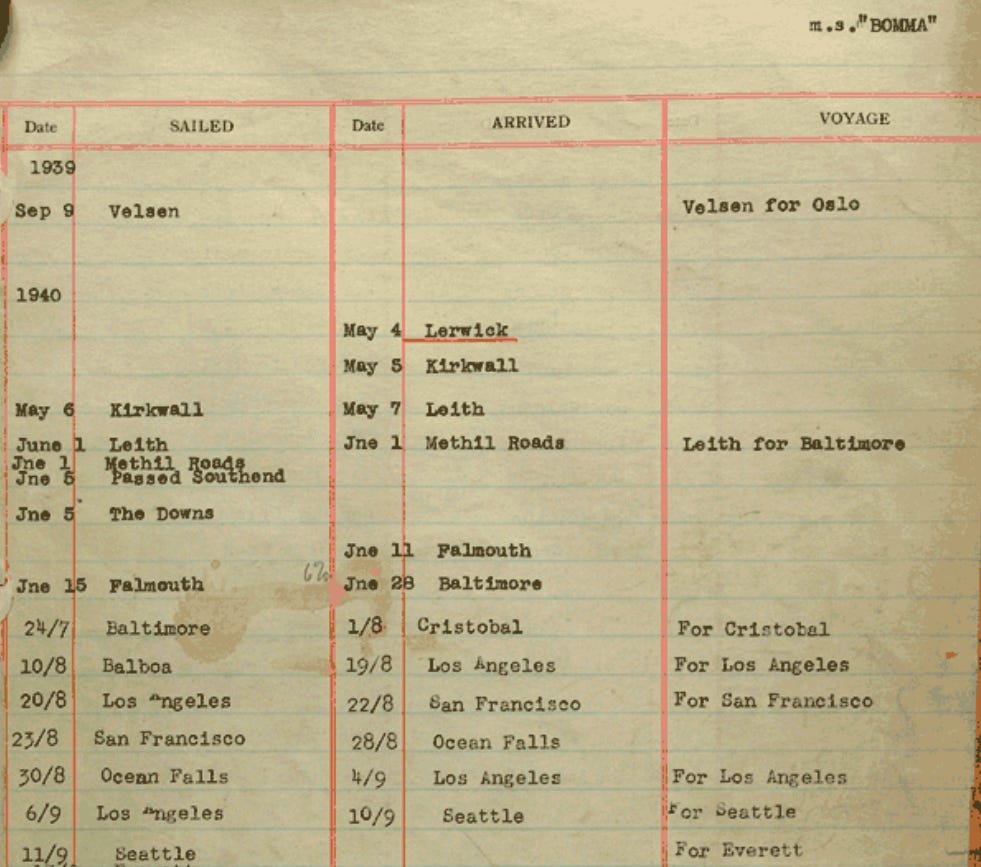
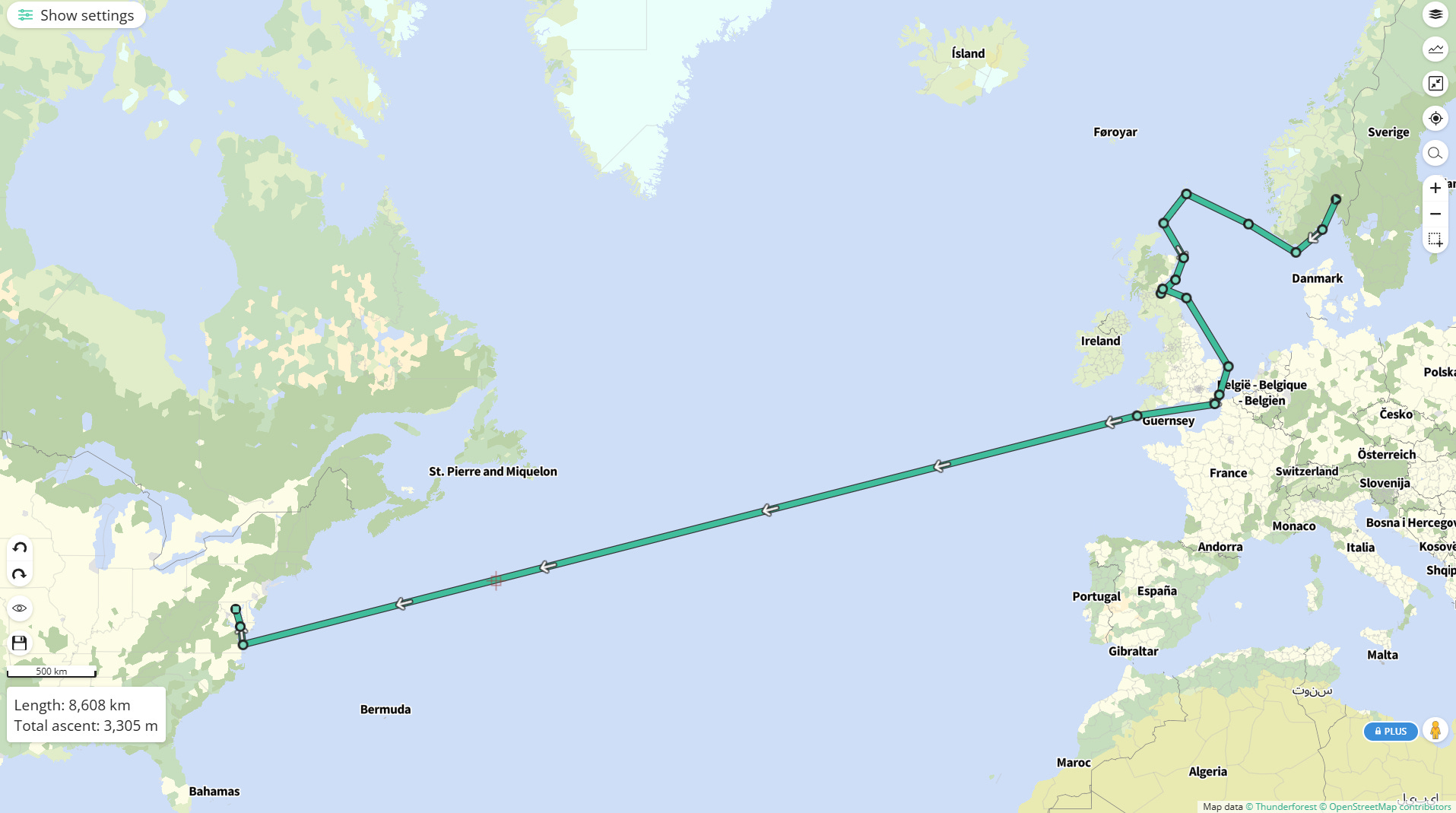
The Bomma’s ship manifest is available online, and one can trace the path of escape from Oslo to eventual safety in the United States.2
Tracking the path it looked like this.
It’s a harrowing tale, the story of Norway’s gold, and there were thousands just like it – from nation-state to the individual level – most without a joyful resolution, but all attempting the same thing: protecting the ownership of private property from a force hell bent on stealing it.
How does one prove ownership of an asset, anyway? Physical possession is a pretty good indicator. But of course, in the civilized world that’s not enough. A legal claim can trump physical possession in most situations. This is a step up from the “might makes right” period of human history.
But when kinetic force is frowned upon in polite society (or, for the bullies of the world, when it’s met with even greater force), those who wish to raid and pilfer the fruits of other people’s labor need to get a bit more creative.3
The Great Taking
In 2023, former money manager David Rogers Webb wrote a book that too few people have read. Titled The Great Taking, the prologue starts off entertainingly enough:
“If you prefer, consider this a work of fiction, or the ravings of a madman.”
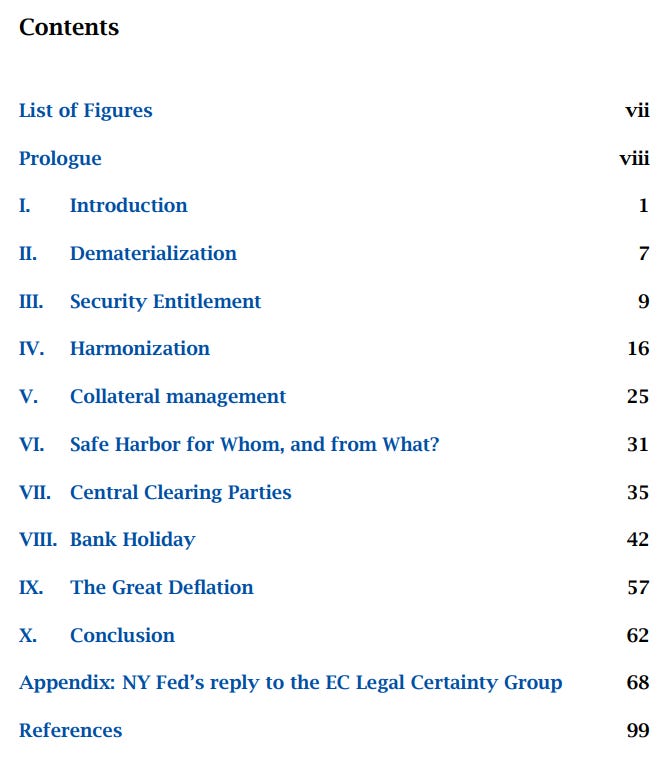
What follows probably does sound crazy to many people, if they have never taken the time to read it. What Webb details is the multi-decade process by which legal structures across the globe have been set up to allow financial institutions to legally seize your assets – should they need or so choose – in the event of a financial collapse. Meticulously citing legal documents, academic works, and Federal Reserve Bank communications with the European Commission, Webb documents in just about 100 pages4 the mechanisms by which the securities you think you own are not actually yours.
The Table of Contents itself gives anyone with a bit of knowledge of how banking works a good idea of where this is going.
Chapter II, “Dematerialization” begins with an ominous statement.
“There are now no property rights to securities held in book-entry form in any jurisdiction, globally. In the grand scheme to confiscate all collateral, dematerialization of securities was the essential first step. The planning and efforts began over half a century ago.”
One wonders if the “Dematerialization” Webb discusses, and the “Tokenization” the likes of Larry Fink and BlackRock are so enthusiastic about are part and parcel of the same diabolical operation.
Then in Chapter III, “Security Entitlement” Webb elaborates (emphasis added).
“Since their beginnings more than four centuries ago, tradable financial instruments were recognized under law everywhere as personal property (perhaps that is why they were called “securities”). It may come as a shock to you that this is no longer the case...You are led to believe that you own something, but someone else secretly controls it as collateral. And they have now established legal certainty that they have absolute power to take it immediately in the event of insolvency, and not your insolvency, but insolvency of the people who secretly gave them your property as collateral.”
Webb continues with what will surely be a shocking statement to most:
“Essentially all securities ‘owned’ by the public in custodial accounts, pension plans and investment funds are now encumbered as collateral underpinning the derivatives complex, which is so large—an order of magnitude greater than the entire global economy—that there is not enough of anything in the world to back it...It is now assured that in the implosion of ‘The Everything Bubble,’ collateral will be swept up on a vast scale. The plumbing to do this is in place. Legal certainty has been established that the collateral can be taken immediately and without judicial review, by entities described in court documents as ‘the protected class.’ Even sophisticated professional investors, who were assured that their securities are ‘segregated,’ will not be protected.”
Again, Webb meticulously goes through the history of the legal maneuvers that got us to this stage. He also addresses the veiled threats he has gotten for bringing this all to light. He recounts a lunch with a man who had been a “Chairman of a U.S. political party” and who had had a long career “related to the defense establishment.”
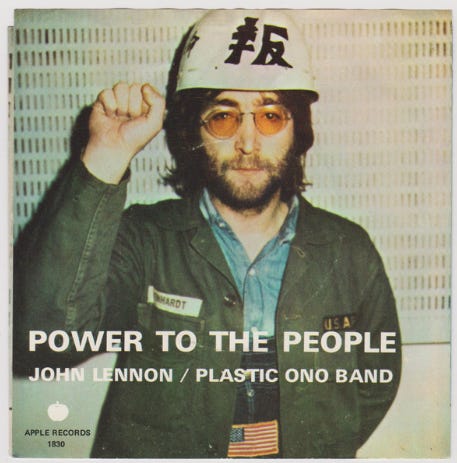
“‘Does your family know you are doing this?’ He said nothing more; that was the end of the meeting. I paid the bill and left. Perhaps it had been a ‘courtesy call.’ We all have to die sometime, and being assassinated must be among the most honorable ways to do it. One must have been doing something right! Made a difference! No classier way to die, really. I always wanted to be like John Lennon!”
As with many of the Baby Boom generation, the spirit of John Lennon’s idealism lives on in David Rogers Webb.5
Don’t say you’re surprised about the next “Bank Holiday” when the next crisis hits.
Read the book. You can download it for free here.
We read The Great Taking not long after it was first published and it brought a whole lot of things that had been floating around in our brains more clearly into focus. But to those without a conspiratorial bent, it may seem alarmist – an attempt at scaremongering.
And to those people, we would ask them to diagram out exactly what they own. Show the chain of custody – the ownership rights, and game out a situation where you can verify that your particular asset cannot be frozen or taken from you by legal means.
None of your stocks qualify. Your portfolios are yours only by the grace of the gods of the financial institutions, central banks, and governments that claim they will make good on them.
Recently, even nation-states are finding this out the hard way.
L’Oro d’Italia
Italy is officially the third largest holder of gold reserves in the world, with 2,452 tonnes.6
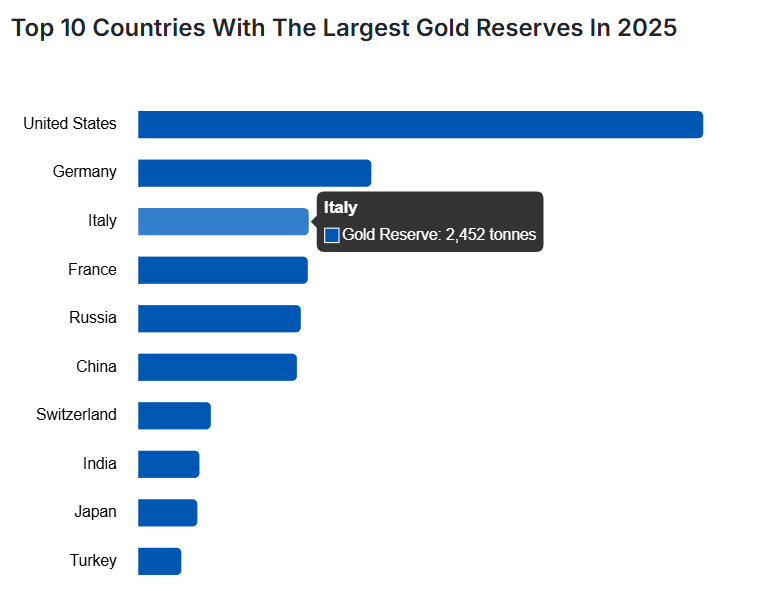
But only about half of that stack is actually held within Italian borders.7
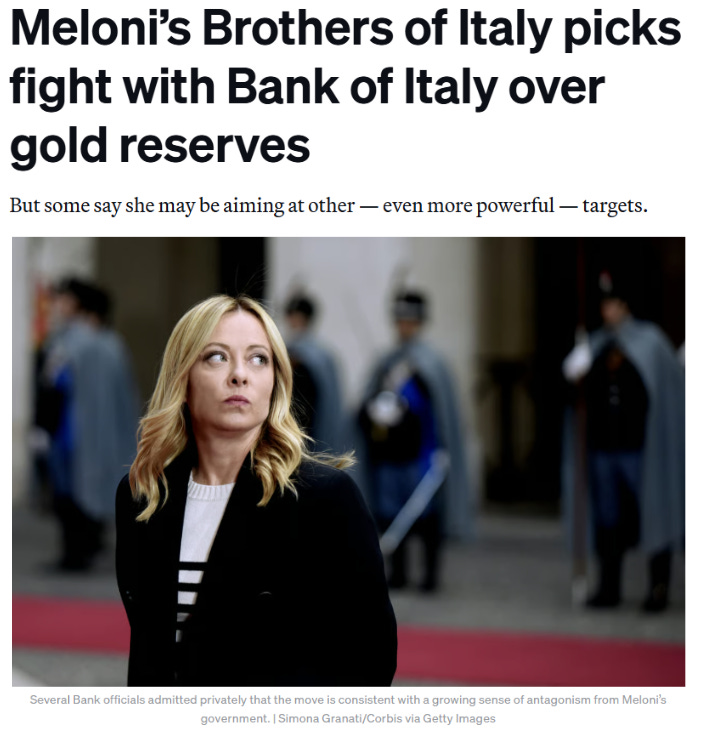
And perhaps perceiving a bit of stress in global financial markets lately, the government of Giorgia Meloni recently dusted off a decades-old issue and pushed for legal clarity on exactly who owns all that gold.
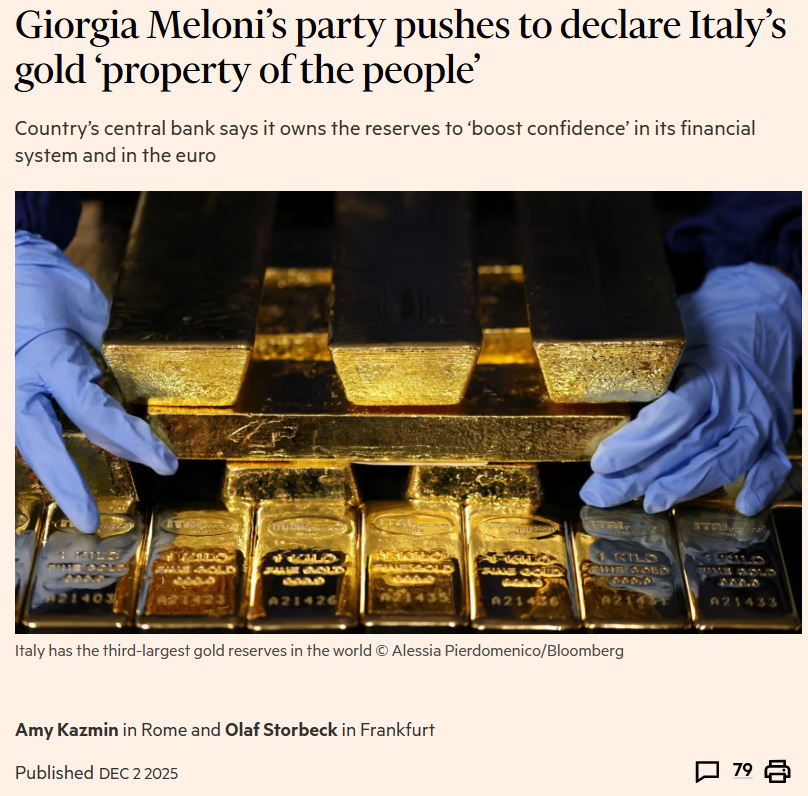
It’s a subject that gets broached every few years. Matteo Salvini, the current Deputy Prime Minister of the country made headlines back in 2019 when he proposed selling Italy’s gold to finance the country’s deficit.
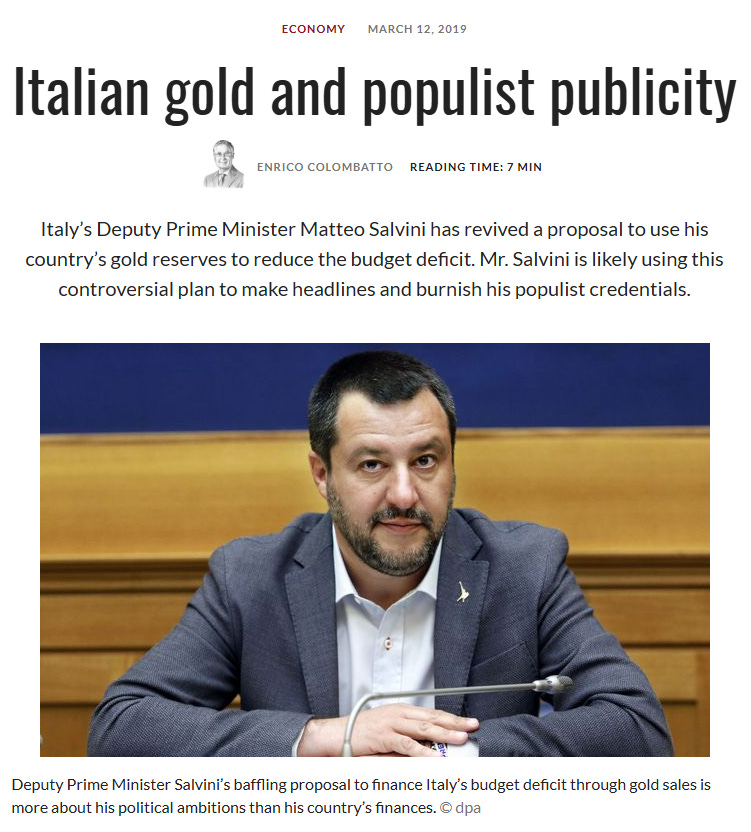
The issue usually gets brushed off as a “populist publicity” stunt – a right-wing gimmick to stir up trouble for the Very Serious Bureaucrats™ in Brussels who have more important things to do with their time – like make sure plastic Coca-Cola and Evian bottles always have their caps securely attached.

But now, to those of us who may have a bit of a historical perspective with the story of the Bomma, and a legal spider-sense tingling with our awareness of The Great Taking, Prime Minister Giorgia Meloni’s party’s concerns seem valid.
In the above-mentioned FT article, Lucio Malan, leader of Meloni’s Fratelli d’Italia party in the country’s Senate asked what seems to be a logical question.
“In Italy, the ownership of every piece of real estate, every car, every boat is recorded. Shouldn’t the same be done for an asset worth almost €300bn?”
It is sad that the duly elected Italian government seems to feel the need to dance around the obvious and make use of rhetorical devices to ask, in a veiled way, what should be two simple and direct questions.
Do the people of Italy own Italy’s gold? And what is the exact chain of custody?
These should not be difficult questions to answer.
And as we are sure no one at the European Central Bank really wants to answer these rather uncomfortable questions publicly, its head Very Serious Bureaucrat™ Christine Lagarde did exactly what we expected – nothing. Well, not exactly nothing. An “Opinion of the European Central Bank” was issued on December 2nd that cites treaties, articles, guidelines, and the normal things a document from the ECB would be expected to cite.
It did say the Banca d’Italia manages the country’s gold reserves as a depositary.
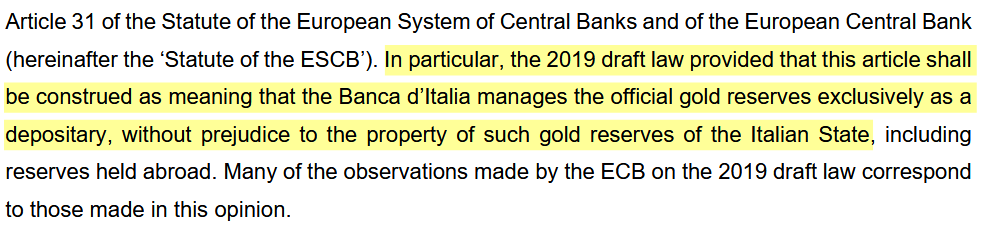
And it did say what the Treaty on the Functioning of the European Union8 does not determine – namely ownership.

“In light of the above considerations,” Lagarde concludes, “it is not clear to the ECB what the concrete purpose of the draft provision is.”9
The purpose is to clarify ownership of all the gold that the people of Italy have accrued over the years. But apparently, the ECB is not the place to ask – at least not the way the question was asked this time. Italy will have to settle for merely managing their gold reserves for the time being.
Ownership will have to remain a bit…nebuloso.10
Cowichan
This concept is not only an issue with gold. A bit of a horror story is playing out, slow-motion train wreck style, right now in British Colombia in Canada.
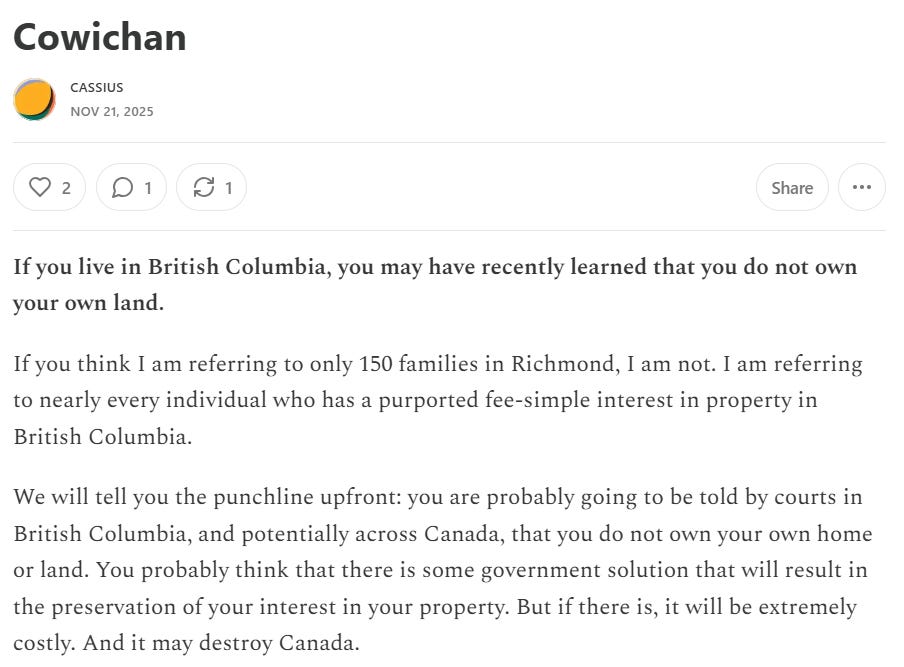
It sounds hyperbolic, but once the precedent is set that native tribes have land right claims on people’s property, and therefore their homes in BC and perhaps beyond, then for the people who bought these homes under false pretenses, the property is not theirs to own.
Those rationalizing this may say that if you buy a stolen car without knowing it’s stolen, that doesn’t make it your property. And that you may just be (rightfully) shit out of luck. So maybe that’s the way it’s got to be for all those Vancouver-area home owners. But the author of the piece is correct. Going this route will absolutely destroy Canada – economy and reputation alike. Maybe that was the whole point from the start.
All these homebuyers may have just gotten rugged. The hardcore bitcoiner crowd has always said that real estate is a shitcoin. Canada is apparently trying hard to prove them right.
So what the hell is one to do?
As things stand your money is, on any given day, completely safe. The Great Taking won’t happen because some evil cabal of globalist bankers just decide one day to take all your shit. But when the next crisis hits, when it comes down to you or them – the system is in place for all of your wealth to be either confiscated, or bailed-in to save the system. But if doing your part and paying your fair share to bail out governments and banks during the next derivatives blow up and financial collapse doesn’t appeal to you, where can you hide?
Stock portfolios, pensions, gold in the form of the GLD ETF or even coins or bullion in a safe deposit box or bank vault are all at risk. The institutions that hold it all for you just need to declare a Bank Holiday, shut off the withdraw button or lock the doors to the brick and mortar building with all your stuff inside and it’s as good as gone.
“But what about real estate?” you may say. Yeah, it’s great (if you’re not from BC). We’ve never seen real estate get confiscated before, right?

Or try not paying taxes on it for just a year and see how much you really own it.
No, there are really only three things that fit the bill of scarce, desirable property. Physical gold and silver that you can touch, and non-KYC’ed, self-custodied bitcoin. These are the only real options to the (rightfully) paranoid plebs reading this.11
And you’re still hearing people worry if gold is “too high” at $4,200 per oz., or that bitcoin is “too volatile” because it went from basically spot on its power trend to potentially a bit below it by the end of 2025? Very fiat-mindset right there.
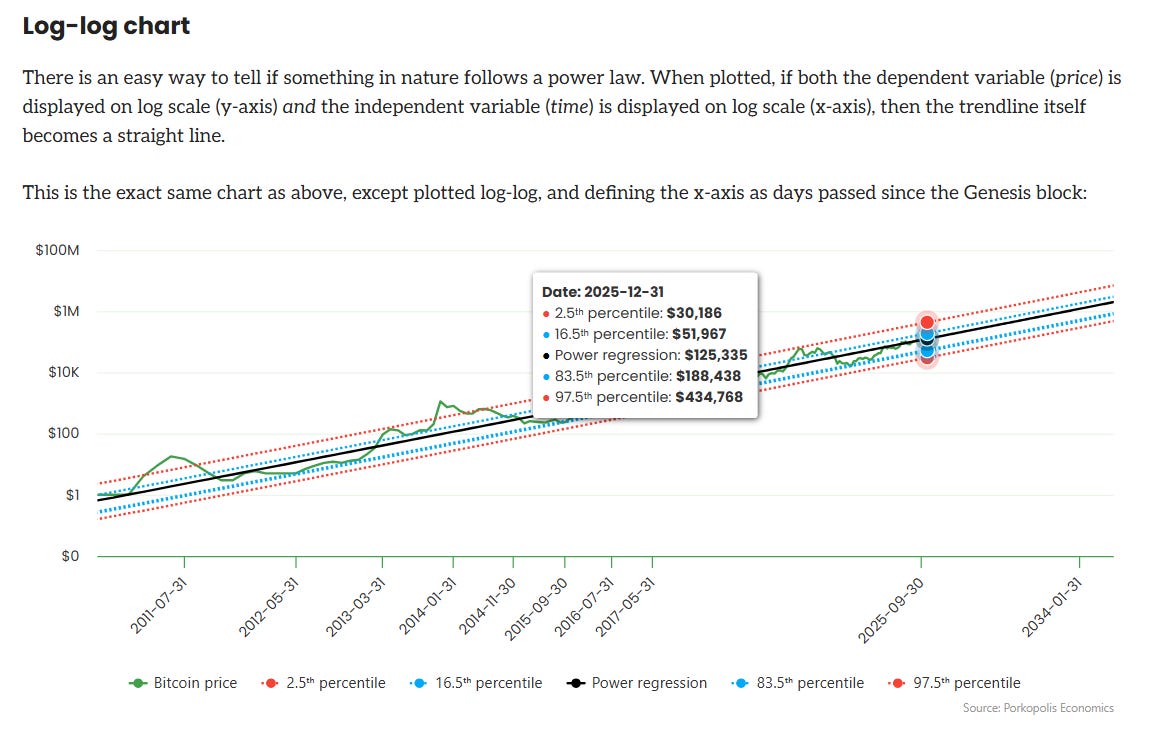
Yes, this is all alarmist – purposefully so. But something big is coming. Everyone seems to be able to sense it. We don’t think it will be long or drawn out. But it will be sharp and violent. And when it does occur, it just makes sense to have scarce assets that no one knows about. Ones that you can access with a shovel or a list of twenty-four words generated with randomness and a cryptographic hash function. By all means, make hay while the sun is still shining. But don’t bank on bank bailouts, and prepare for the worst.
If you ever need to bribe a border guard or get a ticket on the last boat out of town, you’ll likely need some gold. Once you get across that hostile border, the words memorized in your head will give you access to all that bitcoin you had wisely put away and will allow you to rebuild. And the silver will help you get food and the other metal that is sure to come in handy at some point down the road.
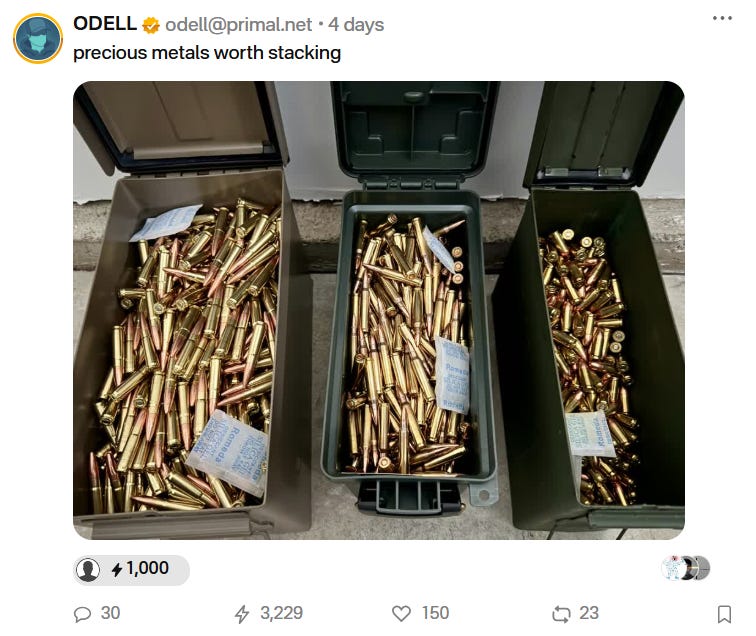
As they say, hard times make strong men. But strong men will eventually make good times again.
Until then, secure some actual unconfiscateable property – not just claims on IOUs. Because when push comes to shove, you’re probably on the bottom of that totem pole.
And “they” have been warning us about that for years.

❤️ “Like” and share this post to share your wealth (of knowledge) with your friends.
To put this in perspective, gold was valued at around $35 per oz. back in 1940, thanks to FDR’s confiscation of Americans’ gold and subsequent “revaluation.” If the story is to be believed, $9 million in 2025 dollars is around $208 million (and that’s if you go by official CPI numbers, which of course are lower than reality). But going a step farther, with gold at $35 per oz., $9 million equates to about 257,000 ounces of gold. At today’s current price of around $4,200, that represents about $1.08 billion (2025 dollars) of the Norwegian people’s wealth, in purchasing power terms, saved from the Nazis on that ship.
The Bomma subsequently sailed around the Americas, but stayed in the Western Hemisphere for the rest of the war. It was finally was able to return to Norway in 1945, reaching Oslo on October 14th.
No, we are not equating the topics discussed next with Nazis taking over Europe, murdering millions and stealing everyone’s stuff. Don’t be stupid.
The Appendix itself is over thirty pages long.
I write these words on December 8th, the 45th anniversary of John Lennon’s assassination – a day that will forever live in infamy.
China places 6th on the list, but in all likelihood has a lot more than its reported reserves.
The rest is held in the United States (43.9%), the U.K. (5.76%), and Switzerland (6.09%), according to data from Banca d’Italia.
And Article 2(1), third indent, of Council Decision 98/415/EC :
Council Decision 98/415/EC of 29 June 1998 on the consultation of the European Central Bank by national authorities regarding draft legislative provisions (OJ L 189, 3.7.1998, p. 42, ELI: http://data.europa.eu/eli/dec/1998/415/oj)
i.e. nebulous, cloudy, opaque, unclear, etc.
KYC = Know Your Customer, and is a banking term to know who customers are and where their money comes from.